

In the precision-driven world of biotechnology, a single percentage point in chemical purity represents the difference between a breakthrough and a failed experiment. You understand that sourcing high-calibre muscle repair research peptides australia requires more than just a domestic supplier; it demands a rigorous commitment to analytical transparency. For many Australian researchers, the challenge isn't finding compounds, but rather navigating the inconsistent purity levels and opaque documentation that often plague the local market.
This 2026 technical review provides an authoritative analysis of recovery peptide mechanisms and the stringent purity standards essential for modern laboratory research. You'll gain a deeper understanding of how growth factor peptides function in controlled environments and how to verify the integrity of your materials. We examine the specific compounds currently available for specialised in-vitro studies, the nuances of interpreting complex Certificates of Analysis, and the triple-verification protocols that define high-standard compounds within the Australian scientific community.
Key Takeaways
- Define the biochemical mechanisms of myogenic differentiation and satellite cell activation essential for accurate tissue repair inquiry.
- Establish rigorous verification standards for muscle repair research peptides australia by utilising HPLC data to eliminate the risk of truncated sequences.
- Implement standardised reconstitution protocols and temperature-sensitive storage techniques to preserve the structural integrity of lyophilised research compounds.
- Navigate the 2026 Australian regulatory landscape to secure high-purity materials from authoritative domestic suppliers focused on laboratory-grade excellence.
The Landscape of Muscle Repair Research in Australia (2026)
The Australian biotechnology sector has reached a pivotal juncture in 2026, characterised by a transition toward granular cellular inquiry. Tissue repair research has moved beyond broad physiological observations into the precise mapping of signalling pathways. This shift is underpinned by the availability of high-calibre muscle repair research peptides australia, which allow for the isolation of specific biological variables in controlled environments. Researchers now maintain a rigid distinction between clinical applications and laboratory-grade reagents. While clinical products focus on patient outcomes, laboratory-grade research demands a level of analytical transparency that prioritises chemical bio-identity and the absence of truncated sequences.
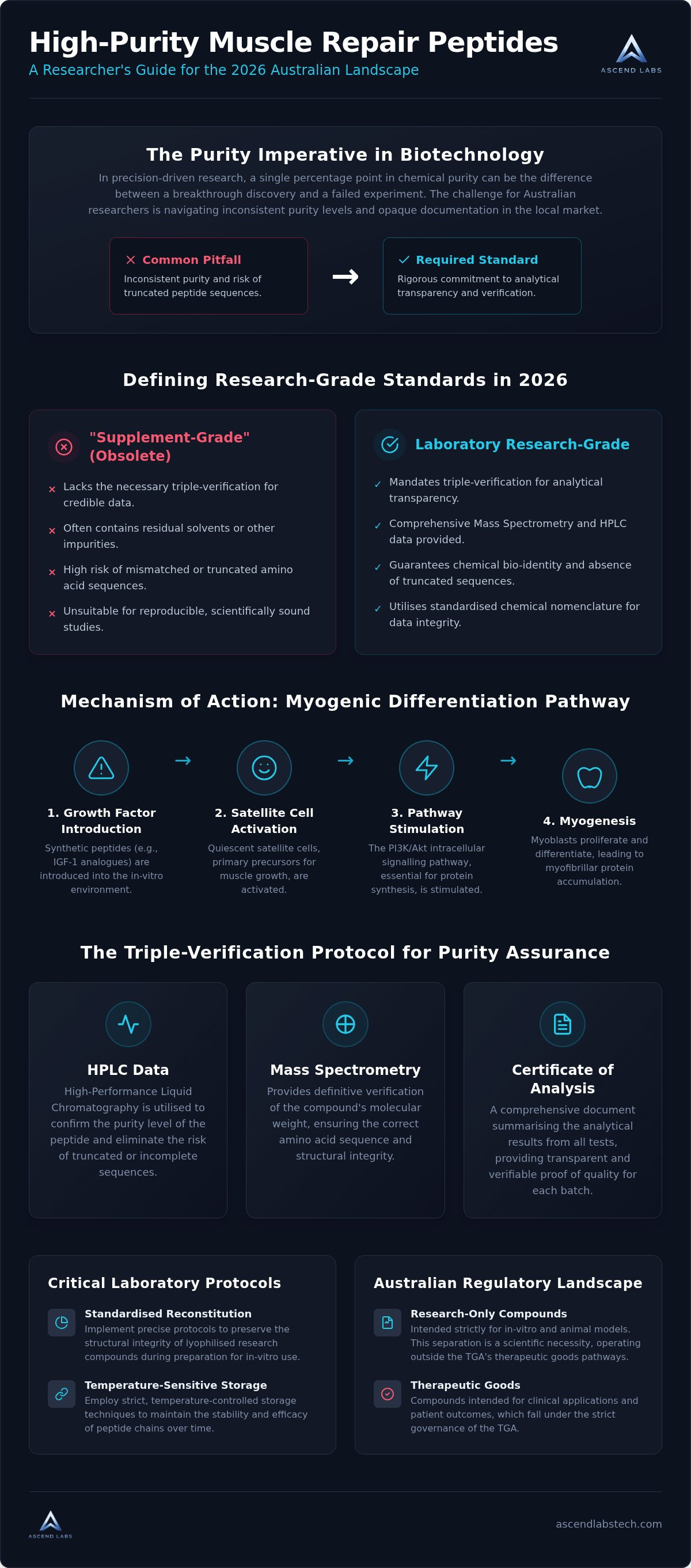
The regulatory framework in Australia ensures that research-only compounds are handled with professional discretion. It's essential to recognise that these materials are intended strictly for in-vitro and animal models, operating outside the TGA's therapeutic goods pathways. This separation isn't merely a legal requirement; it's a scientific necessity. By excluding the complexities of human metabolism, scientists can focus on the fundamental mechanisms of protein synthesis and cellular migration. The evolution of solid-phase peptide synthesis has further refined this process, providing laboratories with synthetic chains that exhibit higher stability and precision than those available in previous decades.
Defining Research-Grade Standards in 2026
The term "supplement-grade" has become obsolete in the context of rigorous scientific inquiry. Such products often lack the triple-verification required for credible data, frequently containing residual solvents or mismatched amino acid sequences. In 2026, Australian laboratories mandate the use of standardised chemical nomenclature to prevent data fragmentation across different studies. High-standard research requires a specialised catalogue of compounds that include comprehensive mass spectrometry and HPLC verification. This level of meticulousness ensures that cellular regeneration studies remain reproducible and scientifically sound.
The Role of Synthetic Peptides in In-Vitro Models
Synthetic peptide chains are engineered to function as precise ligands, effectively mimicking the role of endogenous peptide hormones within a cellular matrix. These models provide a unique advantage by allowing for the observation of myogenic differentiation without the interference of systemic biological noise. Key research priorities in the current landscape include:
- Analysing the rate of satellite cell activation in response to exogenous growth factors.
- Evaluating the structural integrity of muscle fibres during the synthesis phase.
- Investigating the role of metabolic research compounds in accelerating cellular turnover.
Mechanisms of Action: Growth Factor Peptides and Recovery
The efficacy of muscle repair research peptides australia depends on their ability to engage specific intracellular signalling pathways. Myogenic differentiation is a complex cascade. It begins with the activation of quiescent satellite cells, which are the primary precursors for skeletal muscle growth. When researchers introduce growth factor peptides into an in-vitro environment, they observe a shift in the expression of myogenic regulatory factors. This interaction is critical for understanding how synthetic sequences influence the transition from myoblast proliferation to terminal differentiation without the interference of systemic biological noise.
Satellite Cell Activation and Myogenesis
Growth factor peptides are specialised sequences designed to modulate cellular proliferation and repair. In the context of myogenic research, IGF-1 analogues serve as pivotal tools. They stimulate the PI3K/Akt pathway, which is essential for protein synthesis in myoblast cultures. By measuring the rate of amino acid uptake and myofibrillar protein accumulation, scientists can quantify the potency of various peptide chains. These studies help clarify the potential benefits and safety concerns associated with different molecular weights and amino acid sequence modifications.
Advanced Compounds: Retatrutide and Mitochondrial Peptides
Modern inquiry has expanded to include metabolic compounds that influence tissue repair through indirect pathways. Retatrutide, a triple agonist targeting GLP-1, GIP, and glucagon receptors, is currently a subject of intense metabolic research. It provides a unique model for studying energy homeostasis during the cellular repair phase. Similarly, mitochondrial-derived peptides like MOTS-C are being scrutinised for their role in mitochondrial biogenesis. These sequences appear to enhance metabolic recovery by promoting efficient ATP production within damaged cellular matrices.
The introduction of KLOW into longevity and recovery studies has also provided new data on cellular senescence. By modulating the pathways that lead to cell cycle arrest, researchers can better understand how to maintain the proliferative capacity of tissue cultures. For those conducting advanced inquiries, sourcing these specialised research compounds from a domestic partner ensures that the chemical bio-identity remains uncompromised during transit. The synergy between mitochondrial peptides and growth factor sequences represents the current frontier in Australian tissue repair studies.
Evaluating Purity Standards for Australian Laboratory Research
The integrity of any biochemical study rests entirely on the chemical purity of the reagents used. In the specialised field of muscle repair research peptides australia, verifying the molecular identity of a compound is as critical as the experiment itself. High-Performance Liquid Chromatography (HPLC) serves as the primary diagnostic tool for this purpose. It allows researchers to separate and quantify the components of a peptide mixture, ensuring that the target sequence is isolated from synthesis byproducts. Without this level of scrutiny, laboratory findings remain anecdotal at best and deceptive at worst. Analytical transparency is the only way to eliminate experimental noise.
Mass Spectrometry complements HPLC by confirming the exact molecular weight and identity of the peptide. While HPLC measures the concentration of the target compound, Mass Spectrometry detects the presence of truncated sequences or mismatched amino acids. These structural errors can occur during the chain-building process, resulting in a molecule that looks correct on a basic test but fails to trigger the intended signalling pathways in a cellular model. Establishing a gold standard for procurement involves demanding both tests for every batch. This creates a transparent chain of custody from synthesis to the laboratory bench, ensuring that the research data remains beyond reproach.
Interpreting the Certificate of Analysis (COA)
A Certificate of Analysis is the definitive document for quality assurance in the scientific community. To ensure the highest research standards, follow this methodical three-step verification process:
- Step 1: Cross-reference the batch number on the vial with the independent laboratory report to confirm authenticity and traceability.
- Step 2: Analyse the purity percentage. You should aim for a value greater than 99.0% to ensure that impurities do not interfere with cellular signalling.
- Step 3: Review the Mass Spectrometry graph. You should observe a singular, sharp peak that aligns perfectly with the calculated molecular weight of the specific peptide sequence.
The Risks of Sub-Standard Research Materials
Utilising sub-standard materials introduces uncontrollable variables into a study. Impurities such as residual solvents, catalysts, or truncated peptide chains can induce cytotoxic effects in cell cultures, leading to premature cell death or skewed metabolic data. These non-replicable results waste valuable resources while undermining the credibility of the research. Sourcing from specialised Australian suppliers ensures that these risks are mitigated through rigorous domestic testing and climate-controlled logistics. By prioritising verified purity, researchers maintain the precision necessary for advanced myogenic and metabolic inquiry, securing the future of Australian biotechnology.
Critical Considerations for Tissue Repair Research Protocols
Maintaining the structural integrity of muscle repair research peptides australia requires a disciplined approach to laboratory logistics. Once a high-purity compound is synthesised, its stability becomes a function of its physical environment. Lyophilised peptide powders are inherently stable in their solid state, yet they remain highly susceptible to biochemical degradation once reconstituted. Standardising these protocols is the only way to ensure that the results of tissue repair inquiry remain consistent across different study phases.
Solubility is a primary variable. Choosing the correct diluent depends on the hydrophobic or hydrophilic nature of the specific peptide sequence. While bacteriostatic water is common for its antimicrobial properties, certain growth factor peptides may require specific pH-adjusted buffers to prevent aggregation. Incorrect diluent selection can lead to irreversible precipitation, which essentially terminates the experiment before it begins. Researchers must also respect the "research-only" mandate that defines the Australian scientific landscape. These materials are strictly for laboratory use. This boundary ensures that the focus remains entirely on biochemical discovery rather than unapproved clinical applications. It's a matter of professional ethics and regulatory compliance.
Reconstitution and Storage Best Practices
The cold chain is the foundation of peptide stability. From the moment of domestic dispatch to final laboratory storage, temperature fluctuations must be minimised. Fluctuations of even a few degrees can impact the tertiary structure of complex sequences. Peptide bonds are delicate. Exposure to UV light or thermal stress can trigger deamidation or oxidation, rendering the compound biologically inert. Long-term stability studies suggest that storing lyophilised vials at -20°C or -80°C preserves the amino acid sequence for extended periods, while reconstituted solutions should be utilised within a narrow window to avoid potency loss.
Methodological Integrity in Australian Studies
Maintaining high standards for physical performance and recovery is not limited to the lab; for endurance athletes who demand technical excellence, they can check out Fastgear Australia for specialised racing gear and nutrition.
Beyond professional gear, ensuring the purity of dietary supplements is equally important for recovery; you can learn more about My Whey and their focus on lab-tested, unflavoured whey protein.
To complement specific protein intake, researchers often look to established global brands for high-calibre vitamins and minerals; you can learn more about these nutritional supplements and their rigorous quality standards.
Adherence to Australian laboratory safety standards is a prerequisite for credible science. Documenting batch-to-batch consistency is particularly vital for longitudinal studies where even minor variations in purity can compound over time. If a researcher switches batches mid-study, they must verify that the new sequence matches the previous one's analytical profile exactly. For a detailed breakdown of verification steps, researchers should refer to a formal Peptide Purity Testing Protocol. This level of meticulous documentation ensures that every variable is accounted for, allowing for the seamless replication of results in future inquiries.
Securing High-Purity Recovery Peptides for Australian Studies
Procuring high-calibre muscle repair research peptides australia requires a strategic approach to supply chain management. The final phase of any tissue repair study is only as reliable as the chemical reagents utilised. In 2026, the Australian scientific community prioritises domestic sourcing to bypass the inherent risks of international logistics. Global transit often exposes sensitive peptide chains to unpredictable thermal conditions and prolonged customs inspections, both of which can compromise the structural integrity of the compound. By selecting a domestic partner, laboratories ensure a shorter chain of custody and immediate access to analytical data.
An authoritative research partner must provide more than just a catalogue. They must act as a clinical gatekeeper. This involves maintaining a rigorous quality assurance framework that includes triple-verification of every batch. It's about transparency. Meticulous documentation and a focus on chemical bio-identity are the hallmarks of a disciplined supplier. This ensures that when a researcher initiates an in-vitro model, they are working with the exact molecular sequence specified. Breakthroughs in cellular regeneration don't happen by accident; they're the result of combining rigorous methodology with uncompromising material standards.
The Ascend Labs Specialised Catalogue
This level of dedication to sterile and reliable equipment is shared by other Australian professional sectors, including the body art industry, where Tatt Lab provides high-performance supplies for practitioners who prioritise safety and precision.
Ascend Labs maintains a curated selection of high-purity growth factor and recovery peptides tailored specifically for the Australian research landscape. The catalogue includes advanced metabolic compounds such as Retatrutide, KLOW, and MOTS-C, all synthesised to meet the most exacting laboratory standards. Every vial is backed by a commitment to transparency, ensuring that researchers have the mass spectrometry and HPLC data necessary to validate their findings. You can explore the full Ascend Labs Product Range to identify the specific sequences required for your next myogenic or metabolic study.
Supporting the Australian Scientific Community
Streamlining procurement for domestic laboratories allows for a greater focus on scientific discovery rather than logistical hurdles. We prioritise substance and precision, ensuring that every interaction reflects the clinical integrity required in modern biotechnology. This disciplined approach supports longitudinal studies by providing batch-to-batch consistency and secure, discreet handling of sensitive research materials. For a deeper analysis of specific growth factor applications within the local sector, researchers can refer to our Growth Factor Peptides Australia Guide. Final breakthroughs in tissue repair depend on this synergy between high-standard materials and rigorous methodology.
Advancing the Frontier of Australian Myogenic Research
Precision in laboratory inquiry is not an aspirational goal; it's a fundamental requirement. You've seen how the structural integrity of muscle repair research peptides australia directly dictates the validity of your study's outcomes. By prioritising analytical transparency through HPLC and Mass Spectrometry, you eliminate the variables that often lead to non-replicable data.
Standardising your reconstitution protocols and maintaining a rigid cold chain are equally vital steps in preserving the tertiary structure of these delicate amino acid chains. Meticulous material selection isn't just about procurement; it's about safeguarding the integrity of the scientific process itself. As the Australian biotechnology sector continues to evolve, the reliance on high-purity compounds will only increase.
Ascend Labs remains your partner in this pursuit, providing Australian-owned expertise and domestic shipping that ensures your research materials arrive with their clinical-grade purity intact. We look forward to supporting your next scientific milestone with the precision your work demands.
Frequently Asked Questions
What are the most common peptides used in muscle repair research in Australia?
Growth factor peptides and mitochondrial-derived sequences like MOTS-C are prevalent in Australian laboratories. Researchers also frequently utilise KLOW and metabolic research compounds to study cellular senescence and myogenic differentiation. These sequences are chosen for their ability to mimic endogenous signalling pathways in controlled in-vitro models. The focus remains on compounds that provide high analytical transparency and predictable biochemical responses within a laboratory setting.
Is it legal to purchase muscle repair peptides for research purposes in Australia?
Purchasing muscle repair research peptides australia is permissible when the compounds are intended strictly for laboratory and scientific inquiry. These materials are classified as research chemicals and are not for human consumption or therapeutic use. It's vital to recognise that possession for personal use without a prescription is restricted under the Poisons Standard. Researchers must ensure their procurement aligns with institutional safety protocols and state-based laboratory regulations.
How do I verify the purity of a research peptide batch?
Verification requires a comprehensive review of the Certificate of Analysis (COA) provided by the supplier. You should look for High-Performance Liquid Chromatography (HPLC) data to confirm a purity level of at least 99%. Additionally, Mass Spectrometry is essential to verify the molecular weight and amino acid sequence identity. A singular, sharp peak on the HPLC chromatogram indicates the absence of truncated sequences or residual synthesis contaminants.
What is the difference between BPC-157 and growth factor research peptides?
BPC-157 is a synthetic pentadecapeptide derived from a protective protein found in the stomach, often studied for its systemic healing properties. In contrast, growth factor research peptides typically refer to sequences like IGF-1 analogues that target specific myogenic signalling pathways. While both are used in recovery research, growth factors focus more intensely on cellular proliferation and the activation of satellite cells within the muscle tissue matrix.
Can research peptides be used for human trials in Australia without a permit?
No, research peptides cannot be used for human trials in Australia without explicit regulatory approval. Any study involving human participants must be authorised by a Human Research Ethics Committee (HREC) and typically requires notification to the Therapeutic Goods Administration (TGA) under the Clinical Trial Notification (CTN) scheme. Using research-grade chemicals for human subjects outside these regulated pathways is illegal and carries significant professional and legal consequences.
Why is HPLC verification critical for tissue repair studies?
HPLC verification is critical because it ensures the chemical bio-identity of the compound. In tissue repair studies, even minor impurities or truncated peptide sequences can trigger unintended cellular responses, leading to skewed or non-replicable data. By utilising HPLC, researchers can be confident they're observing the effects of the specific peptide sequence rather than residual solvents or synthesis byproducts. This precision is the foundation of credible biotechnology research.
How should recovery peptides be stored to maintain their structural integrity?
Recovery peptides must be stored within a strictly maintained cold chain to prevent biochemical degradation. Lyophilised powders should be kept in a freezer at -20°C or -80°C for long-term stability. Once you've reconstituted the peptide with a suitable diluent, the solution must be refrigerated at 2°C to 8°C and utilised within a narrow window. Exposure to light, heat, or repeated freeze-thaw cycles will compromise the delicate peptide bonds.
Where can I find a reputable supplier of research-grade peptides in Australia?
Reputable suppliers are characterised by their commitment to analytical transparency and domestic logistics. Ascend Labs is a premier Australian-based source, specialising in high-purity research peptides for the scientific community. They provide HPLC and Mass Spectrometry verified batch standards for all compounds, including Retatrutide, KLOW, and MOTS-C. Choosing a domestic partner ensures discreet handling and eliminates the structural risks associated with prolonged international transit.


